
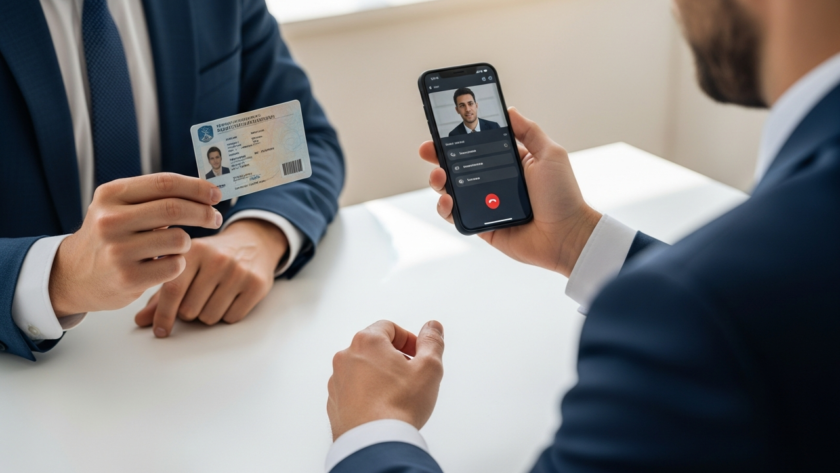
Betting platforms in India may require video call verification before allowing deposits, withdrawals, or full account access. This process involves a live video session with a platform agent who confirms your identity through document checks and face-to-face interaction. Understanding this requirement upfront can save you from unexpected delays when trying to fund your account or cash out winnings.
The video KYC process is typically fast, often completed within 10-15 minutes, but success depends on having quality documents, stable internet connection, and meeting the platform’s specific verification criteria. With proper preparation and understanding of what agents look for, most users can complete this step smoothly on their first attempt.
What video-call verification means for betting accounts in India
Video verification is a live identity check conducted through video call technology, where betting operators confirm a user’s age, account ownership, and document authenticity in real-time. During this process, an agent visually inspects your government-issued documents while comparing them to your live appearance, creating a more secure verification method than traditional document uploads alone.
Betting platforms implement video KYC as part of their fraud prevention strategy, combining know-your-customer (KYC) requirements with anti-money laundering (AML) controls. This approach helps operators comply with regulatory expectations while protecting both the platform and legitimate users from identity theft and account takeover attempts.
The live verification process also enables operators to detect sophisticated fraud attempts that might bypass automated systems. By requiring real-time interaction, platforms can identify deepfakes, manipulated documents, and other advanced fraud techniques that have become more common in digital betting environments.
Why betting platforms use live verification instead of only OTP or document upload
While OTP verification confirms phone number ownership and document uploads provide basic identity proof, live video verification offers significantly stronger security assurance. Automated document checks can miss subtle signs of tampering or fail to detect when someone is using another person’s legitimate documents.
Video calls allow agents to verify that the person on screen matches the submitted documents and can respond to spontaneous questions about their identity details. This human element makes it nearly impossible for fraudsters to use stolen identities or create fake accounts at scale.
Many betting accounts only unlock full functionality, including higher withdrawal limits and premium features, after completing live verification. This tiered approach helps platforms balance user experience with security, allowing quick access for basic activities while requiring stronger proof for higher-risk transactions.
When an Indian betting user is usually asked to complete video KYC
Most platforms trigger video verification requests during the first withdrawal attempt, as this represents the highest risk point for fraudulent activity. However, users may also face this requirement when making large deposits, accessing certain betting markets, or if automated systems flag their account for unusual activity patterns.
Risk-based triggers can include mismatched information between documents and account details, multiple failed verification attempts, or deposits from payment methods that don’t match the account holder’s name. Some operators also require video KYC when users change critical account information like banking details or contact information.
Different betting brands and payment methods may have varying thresholds for requiring live verification. UPI and wallet deposits might have different triggers compared to bank transfers, and international operators often have stricter requirements than domestic platforms.
Documents and information you should prepare before the call
Successful video verification requires having the right documents in acceptable condition, along with technical preparation for a smooth video call experience. Indian betting operators typically request government-issued identity proof, address verification, and sometimes additional financial documents depending on your account activity and deposit methods.
Beyond document preparation, ensure your account information exactly matches your official documents, particularly name spelling and address details. Even minor discrepancies can cause verification failures and require starting the process over with corrected information.
| Item | Why it is needed | Accepted format | Common rejection reason |
|---|---|---|---|
| PAN Card | Tax compliance and name verification | Original physical card or e-PAN | Damaged card or name mismatch |
| Aadhaar Card | Government identity and address proof | Original card or mAadhaar app display | Masked number or poor visibility |
| Passport | International identity verification | Valid passport with photo page | Expired or damaged document |
| Bank Statement | Source of funds verification | Recent 3-month official statement | Outdated or unofficial printout |
| Utility Bill | Current address confirmation | Electricity, gas, or broadband bill | Bill older than 3 months |
| Selfie with Document | Live person and document matching | Clear photo showing face and ID | Blurry image or document obstruction |
Which documents are typically accepted for Indian betting KYC
Indian betting platforms most commonly accept PAN cards as primary identity proof due to their tax compliance significance, while Aadhaar cards serve as both identity and address verification. Passports are universally accepted and particularly useful if your other documents have any issues, and driving licenses can serve as additional identity proof when combined with separate address verification.
For address proof, recent utility bills, bank statements, or rent agreements are typically required to be dated within the last three months. Some operators may also request bank account proof showing the name and account number used for deposits, particularly for higher-value transactions or when payment method details don’t clearly match.
In cases where your current name differs from older documents due to marriage or legal name changes, operators may request additional evidence like a marriage certificate or gazette notification. Having a consistent name across all documents significantly simplifies the verification process and reduces potential delays.
Step-by-step process of identity verification via video call
The video KYC process follows a structured workflow designed to verify your identity efficiently while maintaining security standards. Most betting platforms use similar procedures, though specific steps may vary between operators. The entire process typically takes 10-20 minutes from start to finish, assuming you have all required documents ready and a stable internet connection.
Understanding each stage of the process helps you prepare appropriately and avoid common mistakes that could delay approval. The workflow generally involves pre-call preparation, the live video session itself, and post-call processing where the operator reviews the collected information.
Successfully completing video verification on your first attempt requires following the agent’s instructions carefully and being patient with document positioning and lighting adjustments. Most platforms allow multiple attempts if technical issues interrupt the call, but repeated failures due to document problems may trigger additional review requirements.
- Access the video verification link through your betting account dashboard or email invitation
- Upload required documents to the platform’s secure verification portal
- Complete pre-verification checks including camera and microphone permissions
- Join the scheduled or immediate video call with the verification agent
- Present your documents clearly while following agent instructions for positioning
- Answer verification questions about your identity and account details
- Receive immediate feedback or wait for manual review of your verification session
Before joining the call: upload, check, and consent
- Log into your betting account and navigate to the verification section
- Upload clear photos of all required documents ensuring text is readable
- Verify that your account information matches your uploaded documents exactly
- Enable camera and microphone permissions when prompted by your browser
- Review and accept the verification terms and privacy consent
- Test your internet connection and close unnecessary applications to ensure stability
During the call: live questions, document checks, and face match
The verification agent will guide you through showing each document clearly to the camera, often requesting you to rotate or tilt documents to verify security features and prevent tampering. You’ll need to hold original documents steady while the agent examines details like watermarks, fonts, and photo quality to confirm authenticity.
Expect basic questions about your personal information, account registration details, and recent betting activity to confirm you are the legitimate account owner. The agent may ask you to spell your name, confirm your address, or explain the source of funds for recent deposits, particularly for higher-value accounts.
Face matching occurs throughout the call as the agent compares your live appearance to your document photos, looking for consistent facial features and ensuring you’re not using someone else’s documents. This process may require adjusting your camera angle or lighting to get clear visibility of your face alongside your identity documents.
What the agent checks during video KYC
Verification agents follow systematic checklists to examine multiple aspects of your identity and documents during the video call. These checks are designed to detect fraud while ensuring legitimate users can complete verification smoothly. Understanding what agents look for can help you present your documents effectively and answer questions confidently.
The verification process combines automated background checks with human judgment to catch sophisticated fraud attempts. Agents are trained to spot subtle signs of document tampering, identity mismatch, and behavioral indicators that might suggest fraudulent activity.
| Check | What the agent looks for | Possible issue | Result |
|---|---|---|---|
| Document authenticity | Security features, fonts, watermarks | Altered or fake documents | Immediate rejection |
| Face matching | Live appearance vs document photo | Different person using documents | Verification failure |
| Liveness detection | Natural movement and responses | Pre-recorded video or deepfake | Call termination |
| Information consistency | Account details match documents | Name, address, or age mismatch | Manual review required |
| Document validity | Expiration dates and issuing authority | Expired or invalid documents | Request for valid documents |
| Account ownership | Knowledge of account details | Unable to answer basic questions | Account restriction |
| Age verification | Minimum 18 years for betting | Underage user | Account closure |
How liveness and fraud checks reduce false approvals
Liveness detection involves asking users to perform simple actions like blinking, smiling, or moving their head to confirm they are a real person present during the call rather than a static photo or pre-recorded video. This technology helps prevent sophisticated fraud attempts using high-quality printed photos or even video recordings of the legitimate document holder.
Modern fraud prevention systems can detect deepfakes and other AI-generated content by analyzing subtle inconsistencies in facial movement, lighting, and video quality that are difficult for fraudsters to replicate convincingly. These checks happen in real-time during the call, providing immediate feedback to the verification agent.
By combining liveness detection with document verification and knowledge-based questions, betting platforms create multiple layers of security that make it extremely difficult for unauthorized users to gain account access. This comprehensive approach supports responsible betting practices by ensuring only verified adults can access gambling platforms.
Common reasons betting video verification fails in India
Video verification failures can stem from technical issues, document problems, or identity mismatches that prevent successful completion. Understanding these common failure points helps users prepare better and avoid delays in account approval. Most failures are preventable with proper preparation and attention to document quality.
Poor video quality remains one of the most frequent failure causes, often due to inadequate lighting, unstable internet connections, or low-quality cameras that make document text unreadable. Network interruptions during the call can also force restarts, potentially requiring users to reschedule their verification session.
- Blurry or unreadable document images due to poor camera quality or lighting
- Internet connection drops that interrupt the video call mid-session
- Expired or damaged identity documents that cannot be properly verified
- Name mismatches between account registration and official documents
- Incomplete address proof or utility bills older than three months
- Technical issues with camera or microphone permissions in the browser
- Multiple account registrations detected using the same identity documents
Technical problems that interrupt the call
Low bandwidth internet connections can cause video quality degradation or complete call drops, particularly during peak usage hours when network congestion is higher. Mobile connections may be less stable than fixed broadband, making wifi or ethernet connections preferable for video verification calls.
Browser permission issues often prevent proper camera or microphone access, requiring users to manually enable these permissions or try different browsers. Chrome and Safari generally offer the best compatibility with verification platforms, while some older browsers may not support required video call features.
App crashes or system updates during the call can interrupt the process, though most platforms allow users to rejoin within a reasonable timeframe. Closing unnecessary applications and ensuring your device has sufficient battery charge helps prevent these technical interruptions during verification.
Document and identity mismatches that trigger rejection
Expired identity documents are automatically rejected regardless of their physical condition, as betting operators require current, valid identification to meet regulatory compliance standards. Users should check expiration dates before initiating verification and renew documents if necessary.
Name variations between account registration and official documents, even minor spelling differences or missing middle names, can cause verification failures requiring manual review. This is particularly common when users register with shortened names or nicknames rather than their full legal names as shown on official documents.
Address mismatches occur when users provide current residence information that doesn’t match their official documents, especially if they’ve recently moved but haven’t updated their government-issued IDs. In such cases, recent utility bills or bank statements showing the new address may be required as supporting documentation.
How to pass the verification smoothly the first time
Successful first-time video verification requires thorough preparation, proper technical setup, and understanding what agents expect during the call. Taking time to organize documents, test your setup, and create optimal conditions significantly increases your chances of immediate approval without requiring additional review or resubmission.
Camera positioning and lighting play crucial roles in document visibility and face matching accuracy. Natural daylight or bright indoor lighting helps agents see document details clearly, while proper camera angles ensure both your face and documents are clearly visible throughout the call.
- Gather all original documents and verify they match your account information exactly
- Test your camera and microphone in a well-lit, quiet room with stable internet
- Charge your device fully and close unnecessary applications to prevent interruptions
- Position yourself with good lighting facing the camera with documents within easy reach
- Practice holding documents steady at readable distance from the camera
- Prepare to answer basic questions about your identity and recent account activity
- Have backup internet connection options ready in case your primary connection fails
Best-practice checklist before you start
- Verify all document names match your betting account registration exactly
- Ensure documents are current, undamaged, and clearly readable
- Test video and audio quality using your browser’s camera and microphone settings
- Choose a quiet room with bright, even lighting and minimal background distractions
- Have original physical documents ready, not photocopies or digital images
- Clear browser cache and enable all required permissions for camera and microphone access
- Keep your mobile phone charged and available as backup internet if needed
Security, privacy, and compliance concerns to know
Betting platforms collect and store verification data to meet regulatory compliance requirements and prevent fraud, but users should understand how this sensitive information is protected and used. Legitimate operators implement strong data security measures and only request verification through official account channels, never through unsolicited emails or phone calls.
Understanding the difference between legitimate verification requests and potential phishing attempts helps protect your identity and account security. Official video verification always happens through your betting account dashboard or authorized verification partners, and agents never ask for passwords, PINs, or banking login details during identity verification calls.
Privacy regulations require operators to explain how they use verification data and provide users with control over their personal information. However, successful verification data is typically retained for several years to meet audit requirements and prevent future fraud attempts using the same identity documents.
How to spot a fake verification request
Phishing attempts often involve unsolicited emails or text messages claiming your account requires immediate verification to avoid closure or withdrawal restrictions. Legitimate verification requests always come through your betting account dashboard or official customer support channels, never through external links in emails from unfamiliar addresses.
Fake verification calls may request sensitive information like passwords, banking PINs, or credit card details that legitimate agents never need for identity verification. Real verification focuses solely on confirming your identity through document checks and basic account information that you provided during registration.
Always access verification links by logging into your betting account directly rather than clicking email links, and contact customer support if you receive suspicious verification requests. Legitimate operators can confirm whether they’ve initiated any verification requirements for your account.
What happens to your data after the call
Verification recordings and document images are typically stored in encrypted databases with restricted access limited to compliance and security personnel. This data serves as audit evidence for regulatory inspections and helps prevent future fraud attempts using the same identity documents across multiple accounts.
Most betting operators retain verification data for 5-7 years as required by financial regulations, though some may keep records longer for high-value accounts or if regulatory investigations require extended retention. Users can usually request copies of their verification data or ask about deletion policies through customer support channels.
Verification data may be shared with regulatory authorities if required by law enforcement investigations or compliance audits, but legitimate operators never sell personal information to third parties for marketing purposes. Users should review privacy policies to understand specific data handling practices for each betting platform.
Comparison of verification methods used by betting operators
Betting operators offer various verification methods ranging from basic document uploads to comprehensive video calls, with each approach balancing security requirements against user convenience. Understanding these options helps users choose platforms that match their comfort level with verification processes while meeting necessary security standards.
Higher-security methods like video calls are typically reserved for situations involving larger transactions, suspicious activity patterns, or enhanced due diligence requirements. Most platforms use tiered verification, starting with simpler methods and escalating to more comprehensive checks only when necessary.
| Method | Speed | Security | Typical use case |
|---|---|---|---|
| OTP verification | Instant | Low | Basic account registration |
| Document upload | 1-24 hours | Medium | Standard account verification |
| Selfie verification | 5-30 minutes | Medium-High | First withdrawal attempts |
| Video call KYC | 15-30 minutes | High | Large transactions, risk flags |
| Enhanced due diligence | 1-7 days | Very High | High-value accounts, compliance reviews |
Which method is fastest, and which is most secure
OTP verification offers the fastest approval, typically completing within seconds, but provides minimal security against identity fraud or underage access. Document upload strikes a reasonable balance for most users, offering moderate security with approval times ranging from automated instant checks to 24-hour manual review for complex cases.
Video call verification provides the highest practical security level for routine betting account approval, though enhanced due diligence involving source of funds documentation and manual compliance review offers maximum security at the cost of extended processing times. Most betting platforms reserve the most comprehensive checks for accounts with significant transaction volumes or regulatory risk factors.
For withdrawal processing specifically, video verification often provides the best combination of security assurance and processing speed, allowing most users to complete the process within a single session while giving operators confidence in account legitimacy. This approach minimizes both user frustration and operator risk compared to extended manual review processes.
What to do after your identity is verified
Once video verification is complete, you’ll typically receive immediate feedback about the session outcome, though final approval may require additional processing time for manual review. Most platforms provide status updates through your account dashboard, email notifications, or SMS alerts as your verification progresses through their review system.
After successful verification, your account gains access to previously restricted features like withdrawals, higher deposit limits, or premium betting markets. However, you may still need to complete additional steps like payment method verification or source of funds documentation depending on your account activity and the operator’s compliance requirements.
- Check your account dashboard for verification status updates and any additional requirements
- Verify that your withdrawal methods are active and limits have been updated appropriately
- Test a small withdrawal transaction to confirm your account is fully functional
- Review any new account features or betting limits that may now be available
If the account is approved immediately
Immediate approval means your account should have full access to deposits, withdrawals, and betting features within minutes of completing the verification call. Log out and back into your account to refresh your session and ensure all new permissions are active.
Check your account limits page to confirm withdrawal restrictions have been removed and note any remaining transaction limits that may apply to your account level. Some platforms maintain daily or monthly limits even for verified accounts based on their risk management policies.
If the account is pending review or rejected
Pending review status typically means your case requires manual verification by a compliance specialist, which can take 1-3 business days depending on the operator’s review queue. During this time, your account may have limited functionality, particularly for withdrawals, but basic betting features often remain available.
Rejection usually indicates document issues, identity mismatches, or technical problems during the call that require resubmission with corrected information. Contact customer support for specific feedback about what needs to be addressed before attempting verification again, as repeated failures may trigger additional compliance requirements.
If you need to resubmit documents, ensure all information matches exactly and consider using different documents if the originals had quality issues. Some platforms allow immediate re-verification, while others may require waiting 24-48 hours before scheduling another video call session.